What a Good Primary PE Lesson Really Looks Like
Jun 03, 2026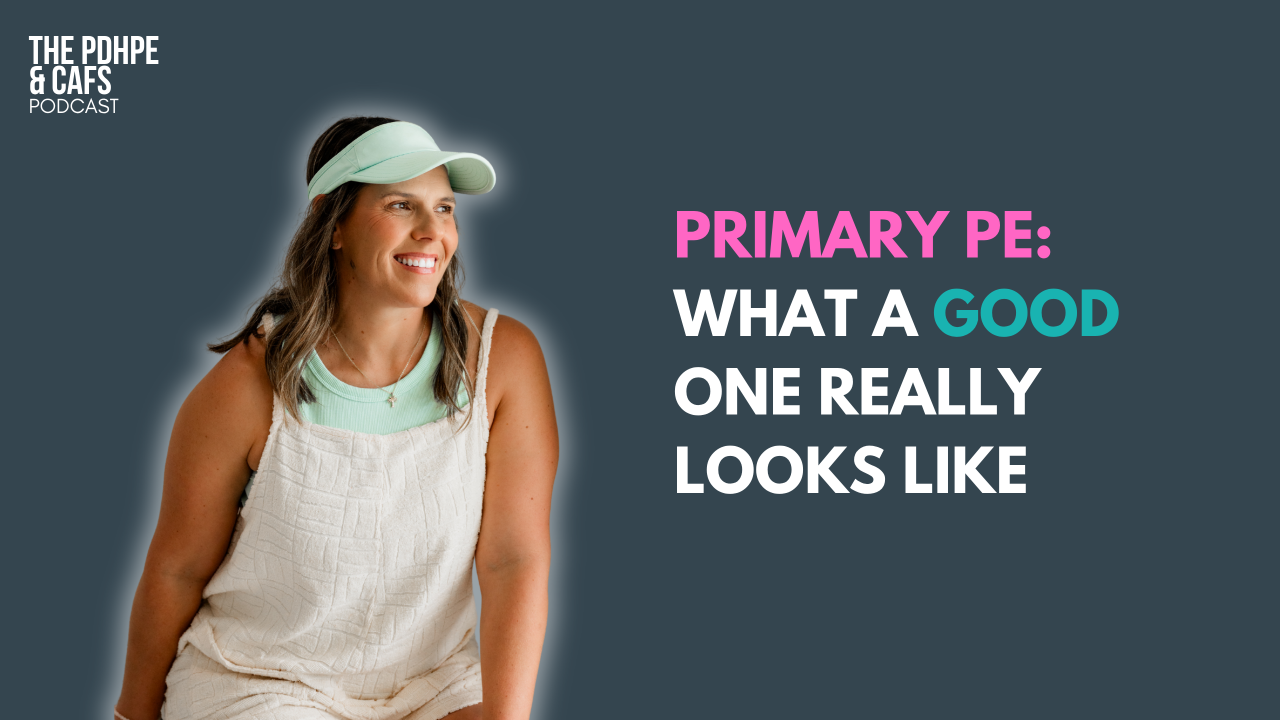
Most primary teachers were never really taught how to teach PE.
They were handed a ball, pointed towards the oval and told to get on with it.
No wonder so many NSW primary teachers feel underprepared, under-resourced and unsure when it comes to teaching primary PE.
This week on The PDHPE and CAFS Podcast, we are unpacking what a good primary PE lesson actually looks like.
Not the perfect lesson.
Not elite sport.
Not students standing in lines waiting for one turn.
A real lesson.
One that builds confidence, movement skills and joy.
Because primary PE is not about teaching elite sport.
It is about teaching children how to move for life.
Start With Fundamental Movement Skills
The new NSW PDHPE K-6 Syllabus brings us back to what matters most.
Fundamental movement skills.
Running. Catching. Throwing. Hopping. Skipping. Dodging. Side galloping. Jumping.
These skills are not extras.
They are the foundation.
If students cannot confidently catch, throw, balance, jump or move through space, they miss opportunities to participate, build confidence and enjoy movement.
And here is the truth.
If you can teach students to read, write, count and problem-solve, you can teach fundamental movement skills too.
You do not need to be the sporty teacher.
You need a clear skill focus, simple cues, modelling and students moving.
Use Equipment and Space Creatively
A good primary PE lesson does not need brand-new equipment or a full oval.
Beanbags.
Soft balls.
Cones.
Hoops.
Skipping ropes.
Playground lines.
Even classroom spaces can work.
Primary teachers are creative every single day. Now it is time to bring that same creativity into primary PE.
You can teach movement in the COLA, the hall, a small section of the playground or even the classroom.
The goal is simple.
Get more students moving more often.
Because standing and waiting is not PE.
Moving, practising, refining and trying again is PE.
Let Students Model the Learning
You do not have to demonstrate everything perfectly yourself.
Please hear that again.
You do not have to demonstrate everything perfectly yourself.
If you are not confident skipping, side galloping or throwing, use your students.
Ask a student to model.
Pause the class.
Talk through what you can see.
Use the “I do, we do, you do” approach.
That structure builds confidence for you and your students.
It also helps students step into leadership, feedback and peer learning in a really practical way.
Make It Joyful, Noisy and Intentional
A good primary PE lesson should sound alive.
Students should be laughing, encouraging each other, trying again and celebrating little wins.
Of course, we still need safety, boundaries and clear expectations. But PE is meant to feel different from sitting at a desk.
Movement brings energy.
And when students feel successful in movement, they come back for more.
The big shift is this.
A good primary PE lesson is intentional.
What skill are we focusing on?
What cues will students use?
How will they practise?
What does success look like today?
That clarity takes primary PE from “go and play a game” to meaningful, skill-building learning.
And that is what our students deserve.
You Do Not Have To Do This Alone
If primary PE has felt overwhelming, you are not alone.
So many NSW primary teachers are navigating the new K-6 PDHPE Syllabus while managing crowded timetables, limited resources and a million other priorities.
That is exactly why we created The K-6 PDHPE Membership.
Inside, you will find practical resources, fundamental movement skill support, cue cards, station cards, Google Slides and ready-to-use ideas that help you teach primary PE with confidence.
Listen to Episode #174 here: thelearnnet.com/174
Explore The K-6 PDHPE Membership: thelearnnet.com/primary
