
Teaching Optimal Arousal in Health and Movement Science
Sep 02, 2026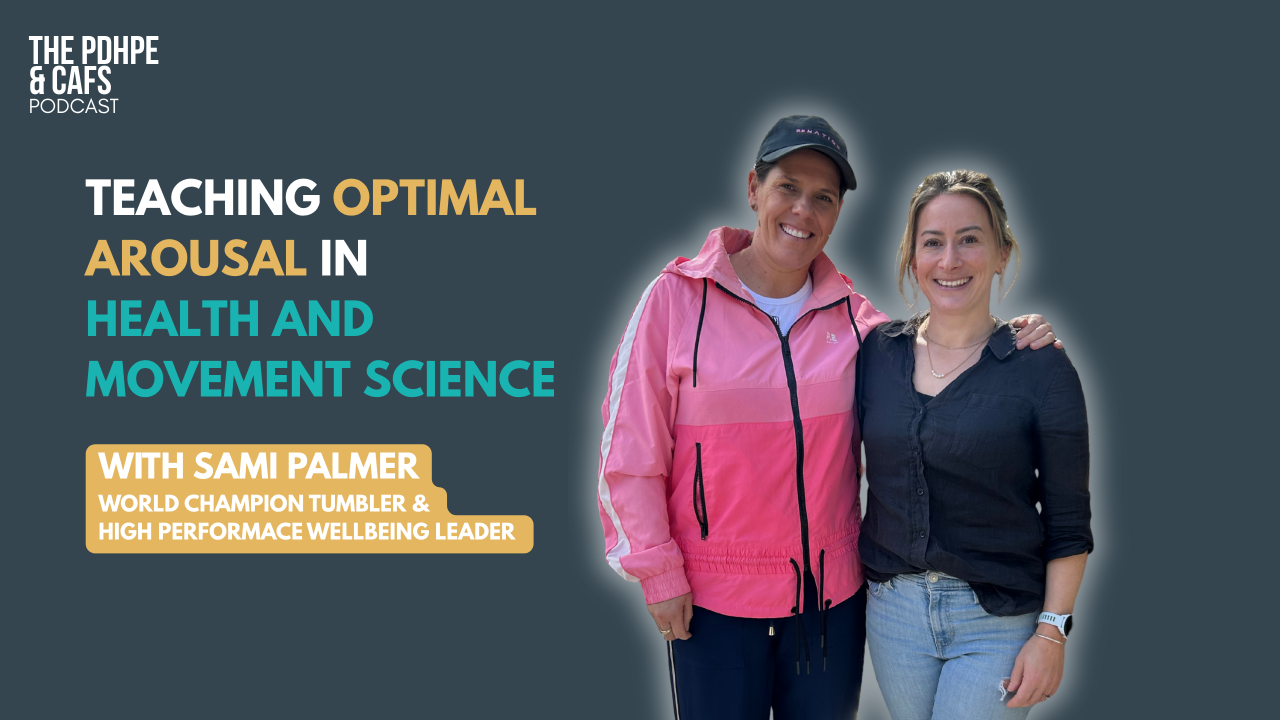
Same athlete, same skills, two competitions a fortnight apart. She bombed one and won the other and the only variable was what was going on in her head.
That story sits at the centre of episode 187 of The PDHPE & CAFS Podcast, part two of my conversation with Sami Palmer. Sami is a world champion tumbler who now works in performance wellbeing with Australian Athletics, which means she has lived this content from both sides, as the athlete under pressure and as the person now coaching others through it.
If you teach optimising arousal and psychological strategies in Health and Movement Science, this episode will do a lot of your lesson planning for you. Here is a taste of what is in it.
A number that changes how students see breathing
We tell Health and Movement Science students that breathing helps manage arousal, then wonder why their answers sound vague. Sami puts a figure on it. Breathing normally, you take in roughly four litres of oxygen a minute, and slowing the breathing consciously takes that to about eight. Once Health and Movement Science students have that number, breathing stops being a calming exercise and becomes a performance variable they can actually build an argument around.
Why no athlete tries a strategy for the first time in competition
Students write about psychological strategies in Health and Movement Science as if the athlete picks one on the day. Sami explains why that never happens, using an analogy you will want to draw on the board. Walking through heavy snow for the first time is hard work, walking back is easier and if you keep walking the same line the path is eventually just there. She is describing a neural pathway, and it is why strategies get built in training long before they are needed, and why athletes hold onto their pre-performance routines so tightly.
Listen
Episode 187 is here: thelearnnet.com/187
Part one of the conversation is here: thelearnnet.com/186
And if you want Health and Movement Science resources built at the depth this course actually demands, that is exactly what The HMS Membership is for: thelearnnet.com/hms
