Teaching Body Image Well in K-6 PDHPE and 7-10 PDHPE
Jun 17, 2026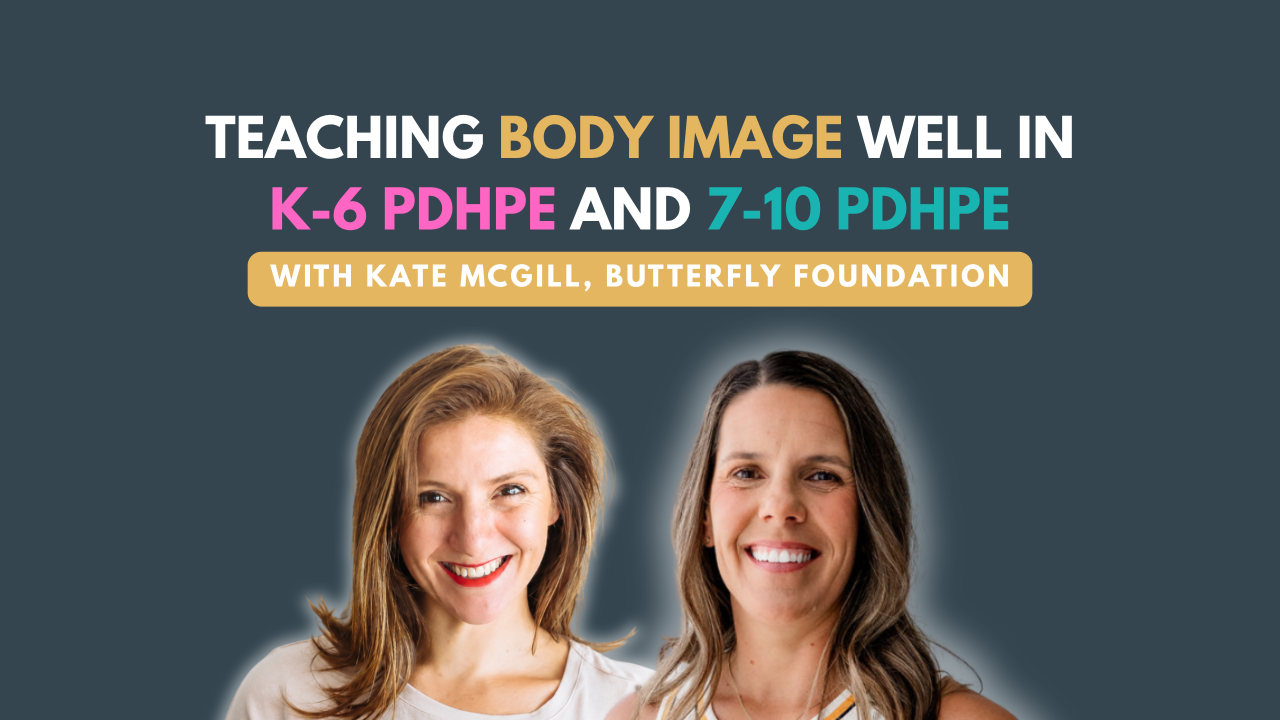
Body Image Starts Younger Than You Think
Body image starts to develop as young as two or three years old. Not Year 8. Not the moment a phone lands in their hands. As soon as a child becomes aware they have a body.
And it gets harder to read. Around a third of six year old boys already want a more muscly body. Roughly 90% of young Australians carry some level of concern about the way they look.
That is almost every child you teach.
This week on The PDHPE and CAFS Podcast, I sat down with Kate McGill from the Butterfly Foundation. Kate is an accredited practising dietitian, a body image coach and one of the warmest, wisest voices on this topic you will ever hear. What she shared is too important to keep to one episode, so let me give you the parts every teacher needs.
Body Image Is Bigger Than the Mirror
When we hear body image, we think about appearance. But it is far more layered than that.
It is how we think about bodies. How we feel about them. Whether we sit positive, negative or somewhere in between. And the behaviours that follow, like how we eat and how we move.
Here is the part worth sitting with. Before you teach any of this to your students, it helps to ask yourself one question. What does health mean to me? Because if our own definition is narrow, we can pass that on without ever meaning to.
Start With What the Body Can Do
For our youngest learners, the best entry point is not appearance at all.
Ask a child their favourite thing to do in the whole world. Sport. Reading. Playing with their dog. You can do that because of your amazing body.
When we put the focus on what our bodies let us do, we quietly take some of the appearance pressure off. Add a little body gratitude in there too. Thank you, body, for letting me do the things I love.
This sits beautifully alongside the new NSW K-6 and 7-10 PDHPE syllabus, which finally brings in the physiology. The heart, the lungs, the brain and what they do for us. Common language from Kindergarten right through to Year 10 is a powerful thing.
Mind the Language Traps
This is the part that catches good teachers out.
We do not mean any harm. But the words we use carry weight, and kids are sponges. A few to watch:
Terms like overweight and obese come straight from BMI, an outdated and problematic system, especially for young people. Be careful with them.
Good foods and bad foods. Healthy and unhealthy. Sometimes food. This moral language around eating can do quiet damage. Eating is a behaviour. Nutrition is a science. They are not the same thing.
And please, no weighing, measuring or BMI calculations in class.
This Is Not Yours to Carry Alone
If this feels like a lot, hear this clearly. It is not a teacher's job to fix body image.
Your role is to open up the conversation, model respectful language and plant seeds, age appropriately, across the whole school journey. Not just one lesson in Year 8. From Kindergarten through to Year 12.
And you do not have to build it from scratch.
Where to Start
For primary, look at Body Bright, Butterfly's primary school body image program.
For secondary, explore Body Kind Schools.
Every year there is also BodyKind August, a free campaign packed with activities, videos and conversation starters.
You can find educator resources and professional learning for your faculty through Butterfly too.
Listen now: thelearnnet.com/176
Don’t forget, if you are looking for practical, time-saving resources and support for the new K-6 PDHPE and 7-10 PDHPE syllabus you can head to thelearnnet.com/pdhpe
Explore Butterfly's free school resources: butterfly.org.au
This episode touches on body image and eating concerns. If this brings anything up for you or a student, Butterfly's support line and resources at butterfly.org.au are a good first step.
