
Applying Biomechanics and Technology in Health and Movement Science Classrooms
Mar 25, 2026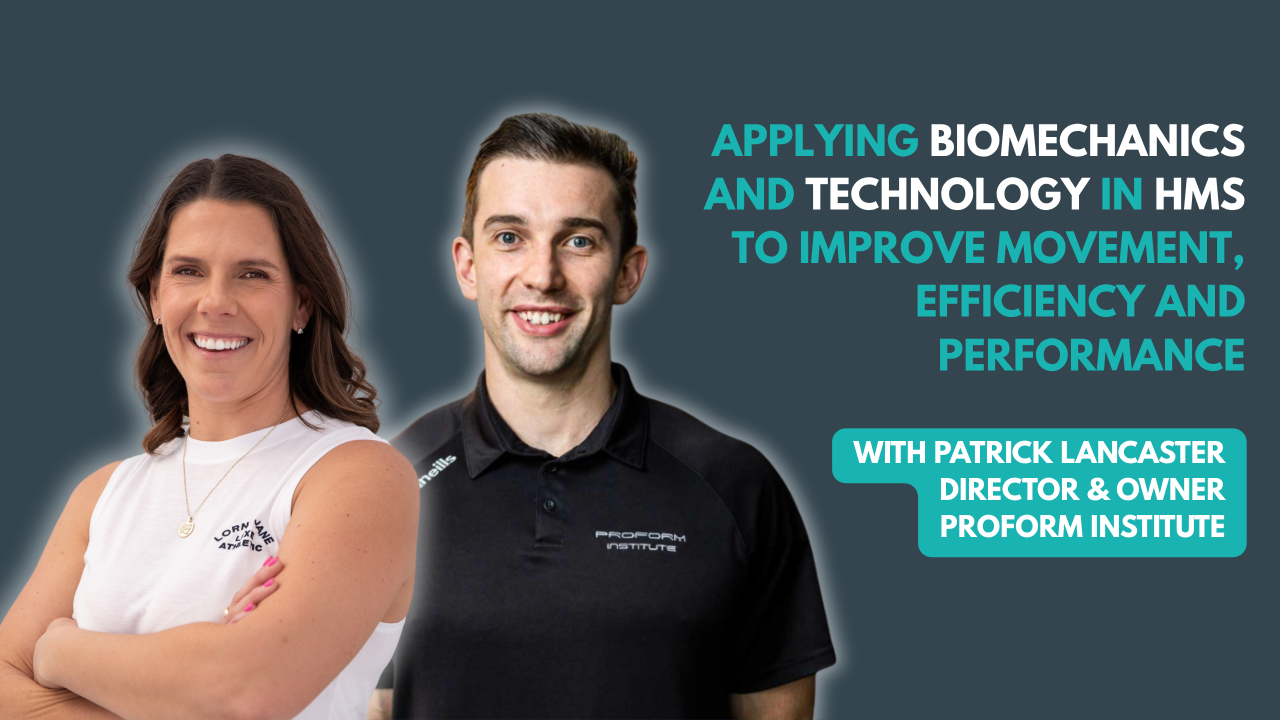
If you’ve ever stared at the Health and Movement Science syllabus thinking…
“I understand the content… but how do I actually teach this?”
You’re not alone.
Biomechanics. Movement efficiency. Technology.
These are some of the most powerful concepts in Health and Movement Science.
They’re also some of the hardest to bring to life.
This week on The PDHPE and CAFS Podcast, we unpack exactly how to move from theory to application with Patrick Lancaster from Proform Institute.
Because here’s the truth.
Students don’t learn biomechanics from a textbook.
They learn it when they see it. Feel it. Do it.
And that’s where everything shifts.
Why Biomechanics Feels So Hard to Teach
Many of us were taught biomechanics through formulas.
Formulas. Forces. Numbers.
And if you’re honest… a lot of it went in one ear and out the other.
But Health and Movement Science is not about memorising formulas.
It’s about understanding movement.
And more importantly, improving it.
Start With What Students Can See
One of the simplest shifts you can make?
Use video.
Film your students running. Jumping. Landing.
Then slow it down.
Suddenly, concepts like centre of gravity, base of support and force production aren’t abstract anymore.
They’re visible.
Use Technology Without Overcomplicating It
You don’t need expensive equipment.
You don’t need a performance lab.
You just need:
- A phone
- Slow motion video
- Simple apps like OCHY
- A clear focus on movement
When students can see how they move versus how they think they move, everything changes.
That gap?
That’s where the learning happens.
Bring Biomechanics to Life Through Sport
This is where your teaching really matters.
Choose a sport. Any sport.
Basketball. Netball. Sprinting.
Then ask:
- How is force applied?
- What makes movement efficient?
- What increases injury risk?
Now you’re not just teaching content.
You’re teaching understanding.
Use Simple Testing to Build Understanding
You don’t need force plates.
Start with:
- Broad jumps for power
- 20m sprint timing
- Vertical jump tests
- Slow motion squat analysis
This is data-informed teaching in action.
And it mirrors exactly what we want students to do in Health and Movement Science.
Connect It Back to Performance
Here’s where Band 5 and 6 responses are built.
Students must link:
- Biomechanics → Movement efficiency
- Movement efficiency → Performance
- Performance → Injury prevention and longevity
That connection is everything.
And it needs to be explicitly taught.
You Don’t Have to Do It Alone
This content can feel overwhelming.
But it doesn’t have to stay that way.
Inside this episode, we break it down step by step so you can walk into your next lesson with clarity and confidence.
🎧 Listen now: thelearnnet.com/167
And if you want hundreds of resources to support you teach Health and Movement Science, you can access the done for you resources inside The Health and Movement Science Membership:
thelearnnet.com/hms
