Are Australians Taking the Fun Out of PE & Sport?
Oct 14, 2026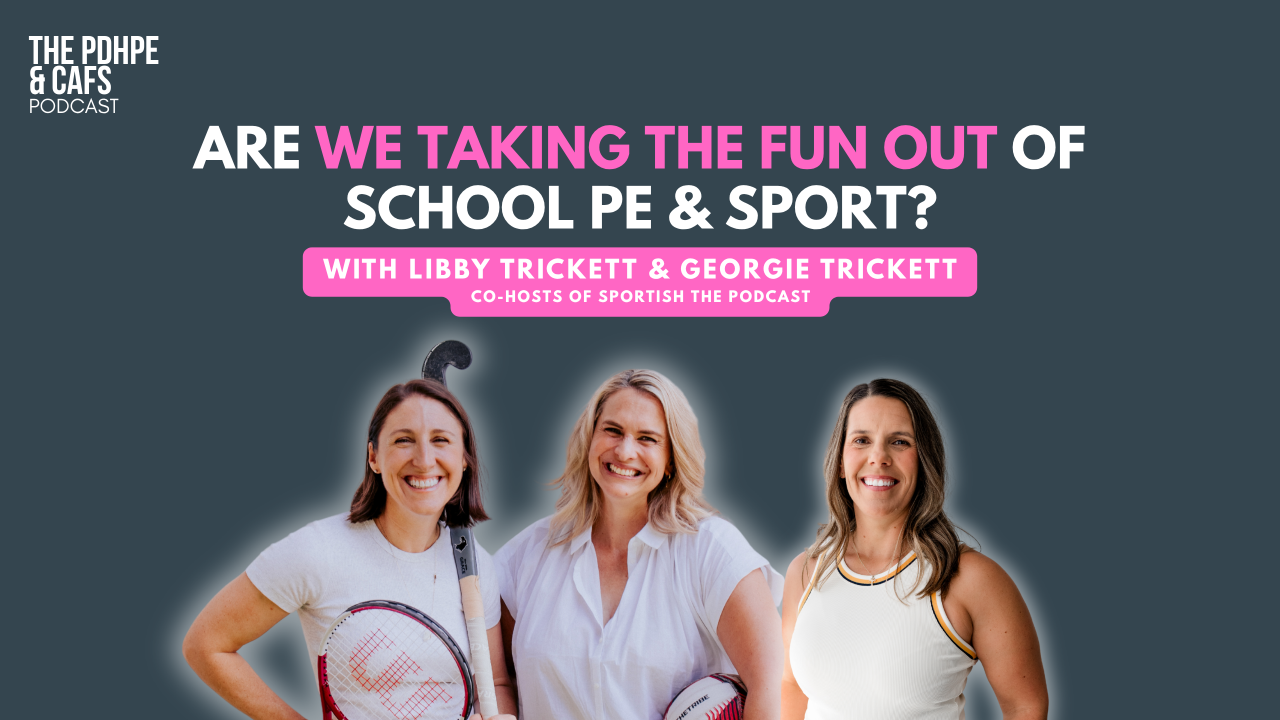
Australia loves sport. We love celebrating our Olympians, cheering on our favourite teams and getting behind our athletes on the world stage.
But there's something about that which has been bothering me lately.
For a country that places so much value on sporting success, why do we still have to fight so hard for physical education to be taken seriously in our schools?
And have we become so focused on winning, competition and performance that we've forgotten why we want our kids to participate in PE and sport in the first place?
These were some of the big questions I explored in Episode 191 of The PDHPE and CAFS Podcast with Olympic gold medallist Libby Trickett and Georgie Trickett, an everyday athlete, health professional and passionate advocate for inclusive sport.
Together, they're the team behind Sportish and ambassadors for the Australian Sports Commission's Play Well Strategy, which is all about helping more Australians find their place in sport.
When Did Sport Become So Much About Winning?
One of the things I loved about speaking with Libby and Georgie was hearing how different their sporting experiences had been.
Somewhere along the way, I think that we have created this idea that progressing through representative teams is what makes someone successful in sport.
But what about the child who loves playing netball with their friends and never makes the A team? Or the student who enjoys dancing, swimming or running but has no interest in competing?
Are we doing enough to make sure those young people still feel like they belong?
Libby raised a great point. Why do some schools only offer an A team and a B team when there are so many more students who want to play?
If students are willing to turn up, have a go and be part of something, surely we should be looking for ways to make that happen.
Why Are So Many Young People Walking Away from Sport?
Fun doesn't look the same for everyone.
For some kids, it's competition and challenging themselves. For others, it's spending time with friends, having a laugh and feeling part of a team.
But as young people move through their teenage years, sport can become increasingly serious. Training commitments grow, competition gets tougher and the pressure to perform can start to outweigh the enjoyment.
Add schoolwork, part-time jobs and social pressures, and it's not hard to understand why some teenagers decide they've had enough.
What Does This Mean for Our PE Classrooms?
Another important part of our conversation focused on fundamental movement skills and physical literacy.
We're talking about skills like running, jumping, catching, throwing and balancing. The building blocks that help children feel confident moving their bodies and participating in physical activity.
Yet primary teachers and high school PE teachers are working with students who have vastly different levels of movement experience and confidence.
For primary teachers, it reinforces the importance of providing regular opportunities to develop and practise these skills.
For secondary PE teachers, it's a reminder that we can't assume every student arrives with the same abilities or positive experiences of sport.
We need to meet students where they're at.
And we need to think carefully about the opportunities we're providing.
Are we creating experiences that help students feel successful? Are we offering activities that cater for different interests and abilities? Are we listening to what young people actually enjoy?
Why Isn't PE a Bigger Priority in Australian Schools?
This is the part of our conversation that really fired me up.
We call ourselves a sporting nation. We celebrate Olympic medals, representative teams and sporting achievements.
But when it comes to everyday physical education in schools, that enthusiasm doesn't always translate into time, resources or support.
Having spent years teaching PE and now working with teachers across primary and secondary schools, I know how much effort goes into delivering quality physical education.
And I know how frustrating it can be when PE is treated as something that can simply be moved, shortened or cancelled to make room for something else.
Libby and Georgie both spoke passionately about the importance of making movement a more consistent part of the school day.
And I couldn't agree more.
We talk constantly about student wellbeing, engagement and learning, yet movement can still be treated as separate from those priorities.
If we genuinely believe physical education contributes to healthy, confident and capable young people, shouldn't our school systems reflect that?
It's Time to Rethink How We Value PE and Sport
One of the things I appreciate about the work Libby and Georgie are doing through Sportish is their commitment to helping more Australians find their place in sport.
As ambassadors for the Australian Sports Commission's Play Well Strategy, they're helping to highlight the importance of making sport more accessible and inclusive.
And that's an important message for schools.
A positive relationship with movement doesn't have to begin with making a representative team or winning a competition.
It might begin with a student learning to catch a ball, a child discovering they love dance or a teenager finding a social sporting team where they feel comfortable.
These experiences matter.
And schools have an enormous opportunity to help young people discover them.
But teachers can't do this alone.
We need school leaders, parents, coaches, sporting organisations and politicians to recognise the value of PE and sport and support it accordingly.
Because if we're serious about helping young Australians develop a lifelong love of movement, we need to give physical education and sport the time, resources and priority they deserve.
And that starts with conversations like this one.
Listen to Episode 191 of The PDHPE and CAFS Podcast: Are We Taking the Fun Out of PE & Sport?
I encourage you to listen to my conversation with Libby and Georgie and share it with a teacher, parent, coach, school leader or decision-maker who can help make a difference.
You can also learn more about Sportish and the Australian Sports Commission's Play Well Strategy.
And if you're looking for practical support to deliver quality PE in your school, explore The Learning Network's Primary PE Resources plus K-6 PDHPE Membership and 7-10 PDHPE Membership.
Let's keep advocating for PE and sport that every young Australian has the opportunity to enjoy.
